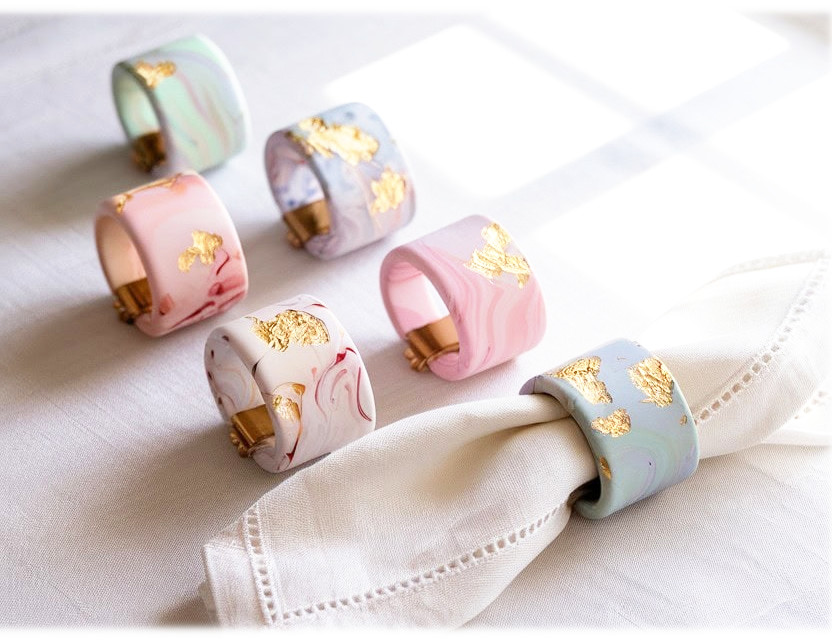
Today, I’m taking you into the colorful and creative world of polymer clay. If you’ve been following me for a while, you’ll know that I’m always on the lookout for new materials to brighten up our interiors, and this one… it’s my absolute favorite! Let me tell you why this magical little paste has revolutionized the DIY projects of so many creators.
A discovery that changes everything
The first time I held polymer clay in my hands, I was surprised by its texture. Soft, malleable, almost like modeling clay, but with far more extraordinary potential. Unlike the clay of our childhood, which always ended up drying out and crumbling, polymer clay remains flexible for as long as you like, until you decide to bake it into a permanent object.
A material like no other
Perhaps you’re wondering what’s behind this rather technical name? Polymer clay is actually a synthetic material made mainly from PVC mixed with plasticizers. I know, when you put it like that, it sounds less poetic! But don’t worry, it’s non-toxic and perfectly safe to use, you just have to avoid throwing this plastic into nature.
What makes it truly unique is its behavior: it doesn’t harden in the open air like natural clay. No, it waits patiently for you to put it in a domestic oven – between 110°C and 130°C depending on the brand – to transform it into a solid, durable object. It’s like having the power to freeze time at the perfect moment!
FIMO is the most famous brand, which is why it’s often used as a generic term, a bit like Frigidaire for refrigerators. But there are other fantastic brands too, like Sculpey, Cernit or Pardo, each with their own particularities.
Why this paste will become your best ally
Disconcertingly easy
What interests me most about this material is its accessibility. Even if you’ve never touched a modeling tool in your life, you’ll succeed with your first creations. The texture is incredibly pleasant to work with, it molds effortlessly under your fingers, and if you miss something before firing, just start again!
Objects that last
Once baked, polymer clay reveals all its magic. Your creations become truly resistant – they have the reputation of not breaking at the slightest impact. You can sand them to soften angles, drill them to create jewelry, polish them for a shiny effect, or varnish them to protect and enhance them.
This durability is exactly what makes all the difference for decorative objects that are going to be handled on a daily basis. Customized drawer knobs, for example, hold up perfectly to intensive use!
A rainbow of possibilities
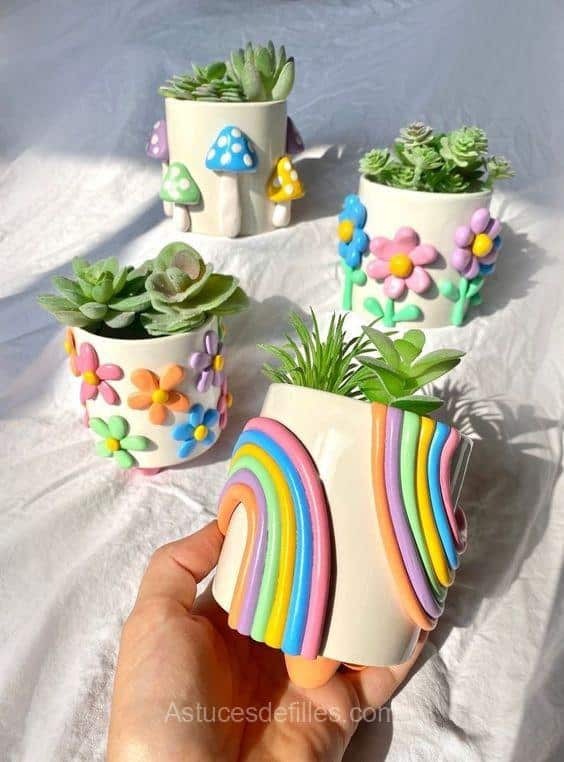
And then, let’s talk colors! This is where my eyes light up every time I enter a hobby store. Polymer clay comes in an absolutely incredible range of hues: from soft pastels to dazzling metallics, as well as glittery, pearly, translucent and even fluorescent versions.
My current craving? Terracotta and powder pink creations to brighten up my office. But the best part is that you can mix the colors together to create your own shades.
Spoilt for choice: which brand to choose?
As I haven’t yet started experimenting with this technique, I’m a bit lost when faced with all the options. I’ve done a little market research on the main brands, but I’ll have to give them a try!
FIMO, the essential reference
FIMO is the historic brand, the one you find everywhere. And with good reason, it offers several really well thought-out ranges:
FIMOSoft: generally recommended for beginners! It’s described as ultra-soft, requiring almost no mixing, and is said to work like a dream. It’s also perfect for projects with children, as it doesn’t tire little hands. Hmm, sounds appealing.
FIMO Professional: when you’re more demanding and want ultra-vivid colors that don’t budge during firing, this is the one to turn to. It’s a little firmer. For parts requiring precision.
FIMO Effect: the eye-catcher in the store! All these special versions – metallic, glitter, stone, translucent – I confess I find it hard to resist. We use it to add a touch of fantasy to more sober creations.

Sculpey, the American alternative
Very popular across the Atlantic, Sculpey also offers several interesting variations. Premo! Sculpey is particularly popular for jewelry, thanks to its flexibility and exceptional strength.
Cernit and Pardo, for further information
Cernit stands out for its firmer texture before firing and, above all, its slightly translucent finish afterwards, which beautifully imitates porcelain. It’s the choice of designers for projects that aim for a sophisticated, delicate effect.
Pardo is renowned for its exceptionally transparent “Translucent” range. If you like depth and light effects, you’ll love it!
What you can create with
To personalize my decor
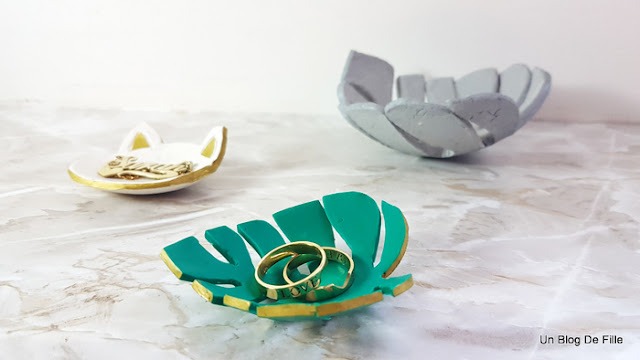
This is where polymer clay reveals all its versatility. For the home, you can create original drawer knobs that transform a simple Ikea chest of drawers, small planters with geometric motifs, key trays for the entrance, elegant name tags for dinners with friends, and even wall-mounted coat hooks to match every room.
Happy marriages with other materials
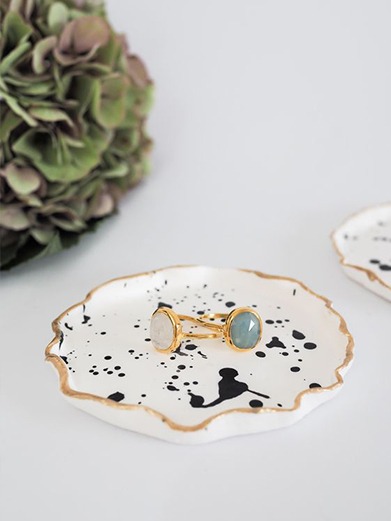
What I also love is that polymer clay plays wonderfully well with other materials. You can combine it with wood for natural creations, with metal for an industrial style, or inlay clay elements on glass. You can also paint it with acrylics after firing, or add mica powders for iridescent effects.
Techniques for the more adventurous
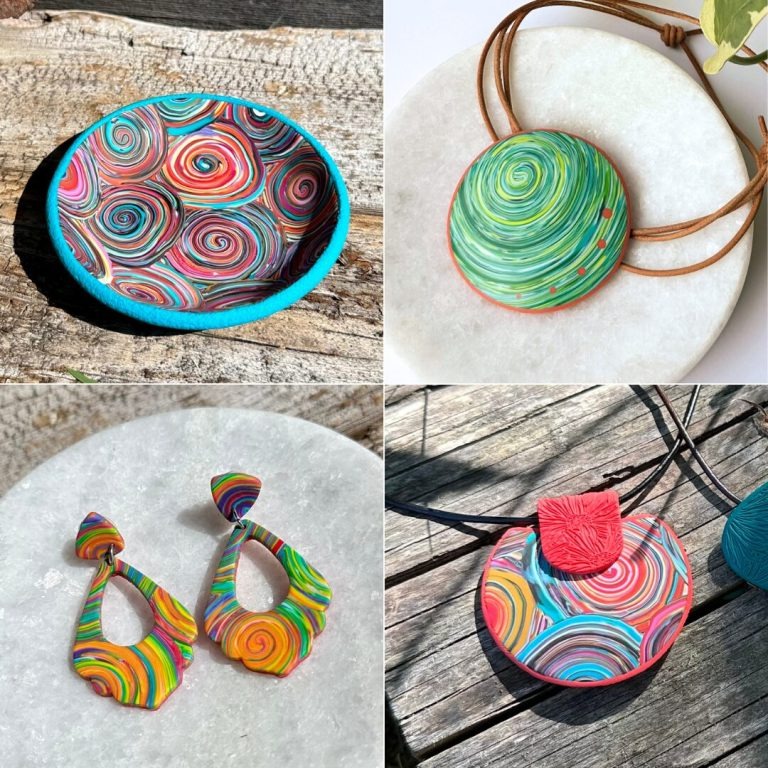
If you’d like to take things a step further, there are some fascinating techniques to explore. millefiori, for example, involves creating layered patterns, as in Venetian glass canes. Mokume gane imitates the effects of traditional Japanese metal.
A practical guide to getting started
What I need
One of the great advantages of polymer clay is that you can start with very few materials. Here’s what we use:
To get started: a few loaves of the basic colors you like, a rolling pin to roll out the dough (your rolling pin will do just fine at first), kitchen cutters, a knife, and that’s it! No need to invest a fortune.
Over time: If you catch the bug, you’ll be able to buy more specialized tools, textures, molds…
The creation routine
Here’s a summary of the techniques I’ve discovered on the net:
Step 1 – Preparation: always work on a clean, smooth surface. And always knead the dough well before starting, even if it already seems supple. This warms it up, makes it more homogeneous and more pleasant to work with.
Step 2 – Modeling: use your hands for basic shapes, and tools for details. Don’t be afraid to experiment, mixing colors and testing textures. And if you don’t like it, just try again – it’s that simple!
Step 3 – Baking: we place our creations on a baking tray lined with greaseproof paper – never directly on the metal. Set the oven to the temperature indicated on the packaging (each brand has its own specificities), and keep an eye on it with a small oven thermometer. This really is a good investment, as an oven that’s too hot can brown or burn the dough, and one that’s not hot enough will leave it soft.
The golden rule? Cool before touching!
Step 4 – Finishing: This is where your creations take on their full personality. A little fine sanding to smooth out imperfections, polishing to shine with a soft cloth, or varnish to protect and give a lustrous effect.
Tips and tricks
To store dough properly
Apparently, storage makes all the difference. We recommend storing paste in a cool, dry place, away from direct light and heat. Well wrapped in its original paper or in airtight bags, it will keep for a long time without hardening.
Safety issues
You can use your conventional kitchen oven to bake your creations, but take a few simple precautions: clean well after use, and make sure there’s never any contact between the dough and the food. Some people prefer to dedicate a small oven to their creations, but there’s really no need if you’re a little careful.
Everyday inspiration
If you’re looking for ideas or want to make progress, I urge you to explore online tutorials. YouTube is full of talented creators sharing their techniques.
So, am I ready to take the plunge?
I’m going to start with something simple: coasters with marbled patterns, little decorations for the festive season, a pretty pot for my pencils? The first project is always the most daunting.
Polymer clay is the promise of unique objects, an accessible and rewarding hobby, and creative moments that feel good. It’s the perfect combination of relaxation, creativity and concrete results. And frankly, in our sometimes too virtual world, having the satisfaction of creating something with your own hands is just magic.
And what are you most tempted by? Colorful jewelry, decorative objects for the home, personalized gifts? Have you ever tried polymer clay?