
Small succulents are always very fashionable. Succulents and cacti are often the first plants we buy. They’re so cute that you’re tempted to propagate them. But how do you take succulent cuttings? Taking cuttings is an easy way of multiplying plants. Here are my tips on how to take cuttings from succulents and succulents. The method is simple and works for all succulents, from Echeveria rosettes to large plants like aeoniums.
Cutting is THE easy way to propagate succulents and succulents. And it’s fun and easy to do!
We’d love to have lots of succulents to make beautiful arrangements, but they grow slowly and we can’t buy them all. Even if a small plant only costs 2.50 euros, if you want ten to make a composition, it’s not that economical.
Cutting can also save a variety that is about to die, attacked by mold, disease or simply over-watered.
Read: How to water succulents and succulent plants
Read: What to do when you’ve watered your succulent too much
Cutting indoor succulents from leaves or stems
Solution 1: Wait for them to multiply on their own. Yes… but you have to be patient
Solution 2: Sowing. You need to find a reliable seed supplier, sow the seeds successfully and be patient, as growth is slow.
Solution 3: Cutting. And it works!
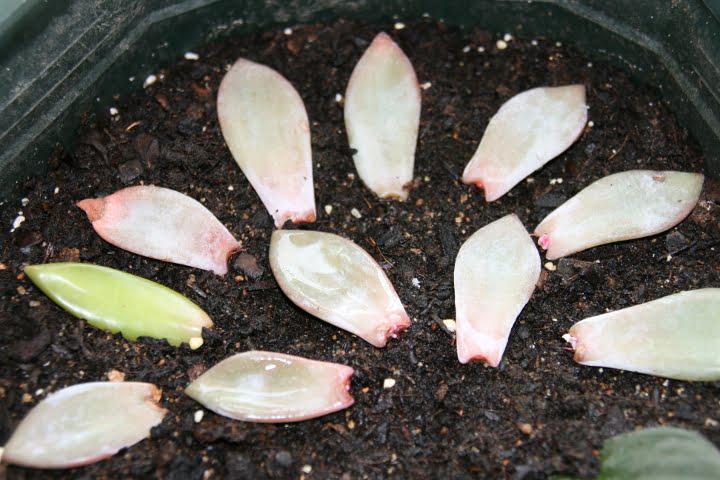
Cutting succulents and succulents is really fun. It’s amazing to see first how tiny roots emerge from the leaf on the ground, and then tiny leaves appear.
How to cut Echeveria and Graptopelatum succulents
Leaf cuttings
1 – Buy a first plant and let it grow a little.
2 – Gently detach the leaves as close as possible to the “trunk”. You can also take cuttings from plant sections, for example when a plant is growing very high and you want to give it a new shape. In this case, both the head (rosette) and the leaves harvested from the trunk are cut.
Read: Why do succulents grow tall?
3 – Place the leaves on a permanently moist seedbed or, for example, on a plastic tray without potting soil. Spray every day. Place the leaves in a well-lit spot, but not in direct sunlight. Preferably indoors.
If you spray well every day, after a few days or weeks new little plants will appear.
I take cuttings in seedling compost, which I find is the substrate succulents prefer. It’s enriched with nutrients and dries quickly, which reduces the risk of rotting. However, you must be careful to spray every day.
Cutting in sand is generally recommended. This is certainly fine for professional, intensive cultivation, but at home, I find it easier to take cuttings directly in potting soil. This avoids the need to transplant very young cuttings into a pot of potting soil.
Cutting or potting with standard potting soil also works.
4 – I wait until the cutting has already put down roots and grown up before placing it in its own pot.
Repotting is a delicate operation, and it’s often at this stage that plants are lost. So it’s best to install your future plant (the leaf to be cut) right away in its final pot and potting soil.
As soon as the aerial roots appear, you need to start basking. The aim is to draw the roots down into the soil. If you just spray, the plants won’t settle into the soil.
It’s not easy to find the right balance between basking and spraying. But it’s the key to success for some delicate plants. Unfortunately, I have no secrets. The cutting environment is different for each of us, so it’s hard to come up with clear rules. You need to observe your plants every day at best, or at least several times a week, take lots of cuttings and persevere.
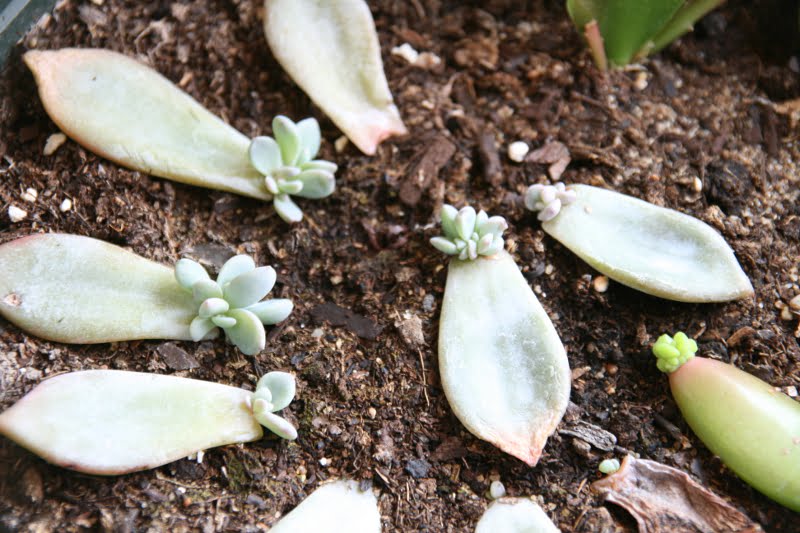
Stem cuttings
How do I take cuttings from a plant stem?
Some plants tend to grow upwards. In this case, both to create a new plant and to give the first mother plant a new shape, the stems are cut.
Wait an hour for the stem to dry at the cut site, then plant directly in potting soil.

Aeonium and Sedum cutting method
For these two plants, it’s much simpler. Simply plant a section of the plant in the ground and it will grow into a new plant.
Some échéverias, which produce a lot of rejection, can also be cut this way.
This method makes it possible to create beautiful winter pots with sedum palmeri.

If you don’t have enough space to keep large plants, winter cuttings can be used to shelter small plant parts that will resume their growth outdoors in spring.

When to cut succulents and succulents?
You may be wondering when to take succulent cuttings?
It works in all seasons, but it seems to me that winter cuttings are quicker than spring cuttings. This may be because the substrate dries out more slowly, or because it’s warm and dry inside the house.
If taking cuttings is an emergency measure, don’t hesitate, even in winter. This year, the frost took the aeoniums (and me too) by surprise. So as not to lose them, I immediately cut off pieces and took cuttings around the house. I may lose the adult plant, but not the variety.
Where to cut succulents?
What works best is behind a south- or west-facing window, in full sun in winter, in the shade in summer. I tested the tunnel in spring and it doesn’t cut very well. You have to keep the cuttings in front of you every day to spray them if necessary. What’s more, I don’t think succulents like cool nights.
For me, the greatest risk of failure is when the plant starts to grow leaves and its water and nutrient requirements change.
Initially, you need to water the plant by spraying it daily. Small aerial roots then form in the case of leaf cuttings.
Next, the plant will put down roots. You need to draw the roots towards the bottom of the pot, so don’t water from above. If you see that the cutting is suffering from thirst, water a little more from the top, but be careful not to rot it.
This is a delicate moment in the plant’s growth: too much water and it rots, not enough water and it dries out.
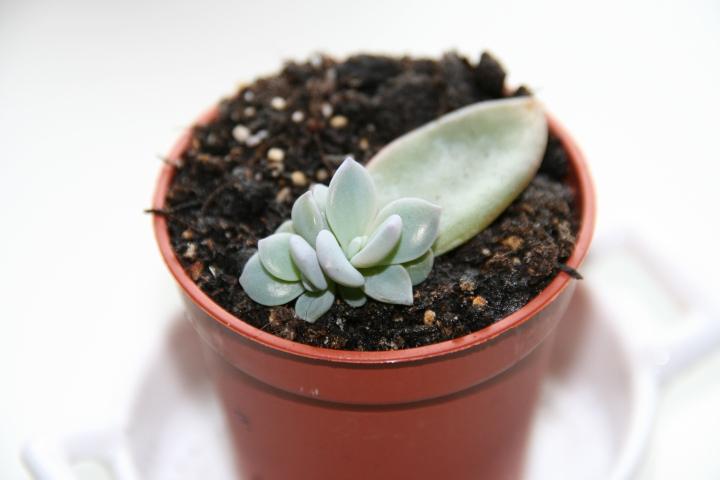
When and how to repot or replant young cuttings?
I wait until the cutting has already put down roots and grown up before placing it in its own pot.
Repotting is a delicate operation, and it’s often at this stage that plants are lost. So it’s best to install your future plant (the leaf to be cut) right away in its final pot and potting soil.
As soon as the aerial roots appear, you need to start basking. The aim is to draw the roots down into the soil. If you just spray, the plants won’t settle into the soil.
It’s not easy to find the right balance between basking and spraying. But it’s the key to success for some delicate plants. Unfortunately, I have no secrets. The cutting environment is different for each of us, so it’s hard to come up with clear rules. You need to observe your plants every day at best, or at least several times a week, take lots of cuttings and persevere.
You need to wait a long time, at least 6 months, before repotting young cuttings. If you repot them too soon, they won’t have enough roots to take root properly.
This plant below, for example, will certainly have trouble settling into its new pot. I should have waited a while before pulling it out of the ground.

Next, it’s best to repot during the period of strong growth. In other words, in spring.
See: How to repot succulent cuttings
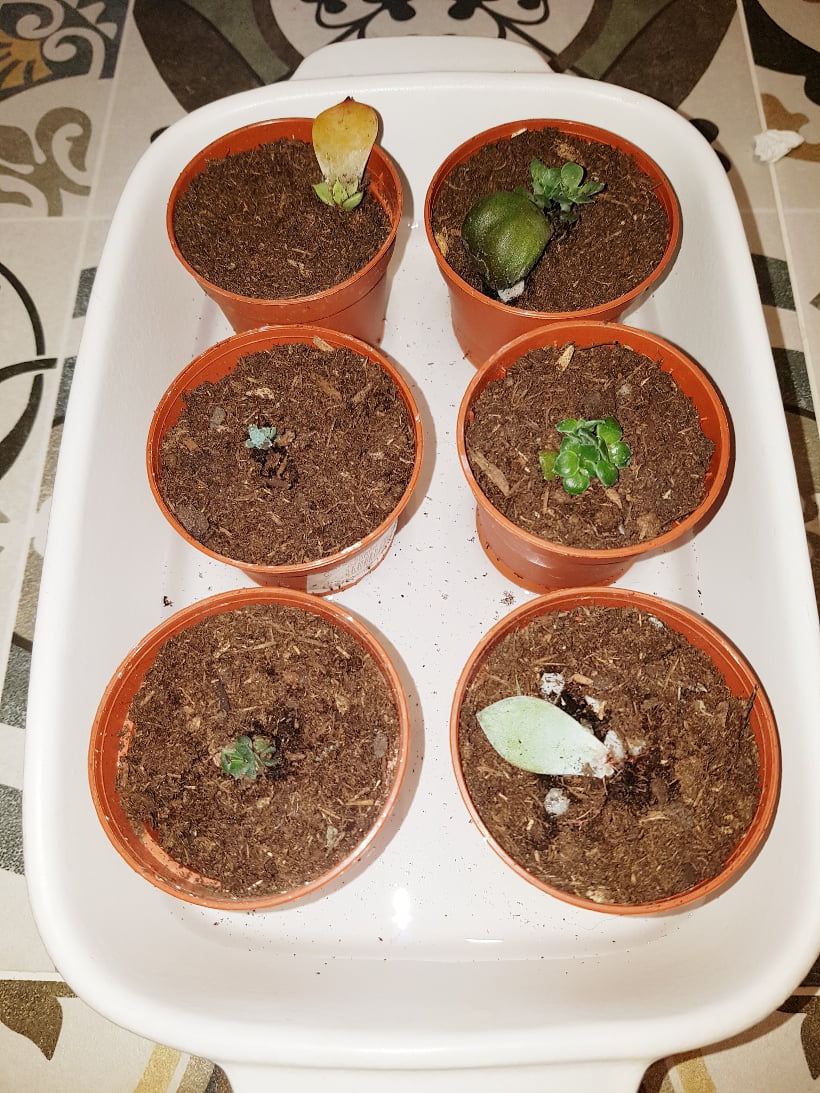
Finally, water the plants in basins, then spray them regularly so that new roots develop on the surface. As repotting is delicate and easy to fail, make sure you keep an eye on the plants every day to prevent them dying of thirst.
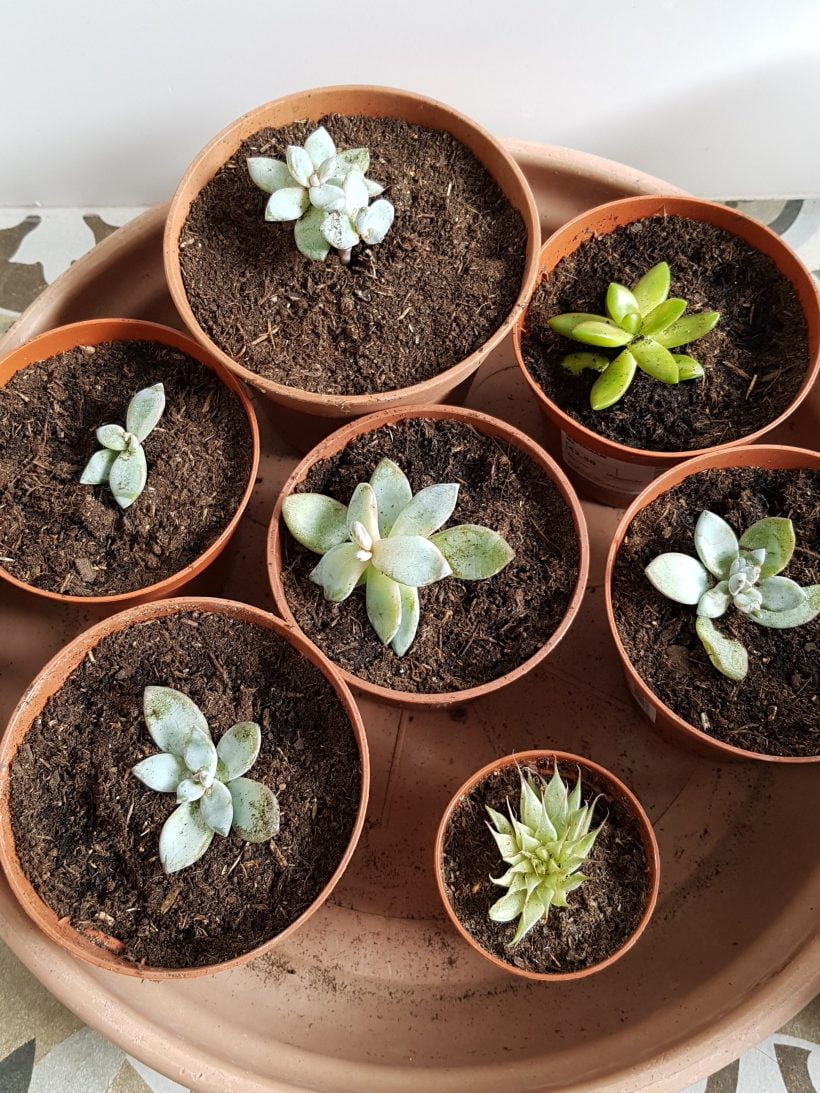
The same plants a few months later:


