
Ramial Chipped Wood (RCW), known as Bois Raméal Fragmenté (BRF) in French, has become an essential technique for natural and permaculture gardening. Made from freshly chipped young branches, it helps regenerate the soil, improve its structure, and significantly reduces the amount of work needed to maintain a healthy garden.
I’ve been using RCW in my own garden for the past 10 years, and I’m genuinely impressed by the results. Not only have I seen better harvests in my vegetable garden, but I’ve also noticed healthier flower beds, fewer weeds, and soil that stays moist much longer during dry periods.
In this article, I’ll explain what RCW is, how it works, its benefits and limitations, and how I use it throughout my garden—from the vegetable patch and greenhouse to ornamental beds and even the compost pile.
In this guide
- What Is Ramial Chipped Wood (RCW)?
- What Is RCW Used For?
- Advantages and Disadvantages of Using RCW
- Where to Get RCW
- Understanding Nitrogen Immobilization
- How I Use RCW in My Garden
- In the Vegetable Garden
- Inside the Greenhouse
- In Ornamental Beds
- In the Compost
1. What Is Ramial Chipped Wood (RCW)?
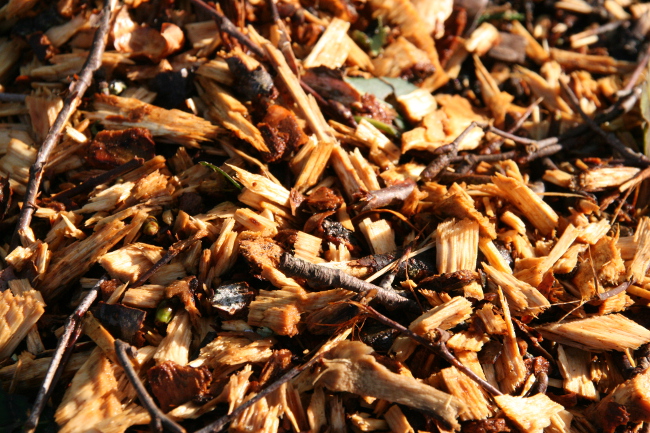
Ramial Chipped Wood (RCW), known as Bois Raméal Fragmenté (BRF) in French, is a natural mulch made by shredding fresh, young tree branches. Unlike traditional wood chips, RCW is produced mainly from small branches less than 7 cm (3 inches) in diameter.
These young branches are particularly rich in nutrients, sugars, proteins, and minerals. They also contain a high proportion of bark and buds, which makes them much more valuable for improving soil than wood from mature trunks or large branches.
The concept of RCW was developed in Canada during the 1970s as part of forestry research. Scientists observed that forest soils remain fertile thanks to the continuous decomposition of fallen branches, leaves, and organic matter. By reproducing this natural process in the garden, RCW helps restore biological activity and build healthy, living soil.
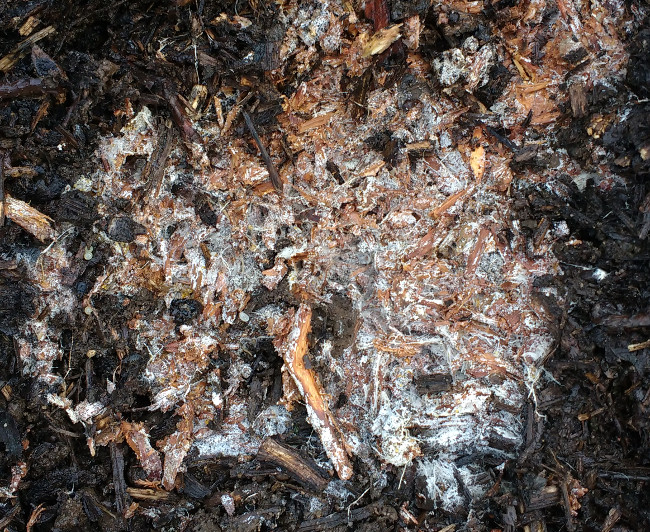
Unlike compost, which is already decomposed before it is applied, RCW gradually breaks down directly on the soil surface. Earthworms, fungi, bacteria, and countless other microorganisms transform the wood into humus over time, enriching the soil naturally.
2. What Is RCW Used For?
Although RCW is often described as a simple mulch, it does much more than protect the soil surface.
Its primary purpose is to recreate the conditions found on a forest floor, where organic matter is constantly recycled into rich, fertile soil.
Gardeners use RCW to:
- improve soil structure naturally;
- increase organic matter and humus;
- stimulate beneficial fungi and microorganisms;
- retain moisture and reduce watering;
- suppress weeds;
- protect the soil from erosion and temperature fluctuations;
- encourage earthworms and other soil life.
RCW is especially useful for restoring poor, compacted, or depleted soils. Rather than relying on fertilizers to feed plants directly, it feeds the soil ecosystem first. Healthy soil then provides everything plants need to thrive.
RCW can be used in many areas of the garden, including:
- vegetable gardens;
- flower beds;
- around trees and shrubs;
- orchards;
- berry patches;
- pathways;
- and even compost piles, where it helps improve the balance between green and brown materials.
One of the greatest advantages of RCW is that it continues to improve the soil year after year. As the wood slowly decomposes, it creates a stable, living ecosystem that becomes richer and more resilient with every season.
3. Advantages and Drawbacks of Using Ramial Chipped Wood (RCW)
Advantages
After using RCW in my garden for several years, I’ve noticed many benefits, both for the soil and for the plants.
- Increases organic matter
As the wood gradually decomposes, it enriches the soil with organic matter and contributes to the formation of humus. - Improves soil structure
RCW encourages earthworms and soil microorganisms, making the soil lighter, looser, and easier to work. Even heavy soils become easier to cultivate over time. - Excellent moisture retention
Wood acts like a sponge, absorbing rainwater and releasing it slowly. In addition, the fungal network (mycelium) can transport water over surprisingly long distances, helping plants cope with dry periods. - Helps balance soil pH
Over time, RCW tends to encourage a healthier, more balanced soil environment, which benefits most garden plants. - Fewer pests
A healthy, biologically active soil often results in stronger plants that are naturally more resistant to diseases and pests. - Natural weed suppression
A generous layer of RCW blocks sunlight, greatly reducing weed germination and making the garden much easier to maintain.
Drawbacks
Finding enough RCW
For most home gardeners, obtaining enough RCW is probably the biggest challenge.
- You can buy a small garden shredder, but inexpensive models often struggle with branches, clog easily, and process only small quantities. A truly efficient wood chipper represents a significant investment.
- Some municipalities organize community chipping events or allow residents to use municipal shredders. If this service is available where you live, it’s worth planning your pruning schedule accordingly.
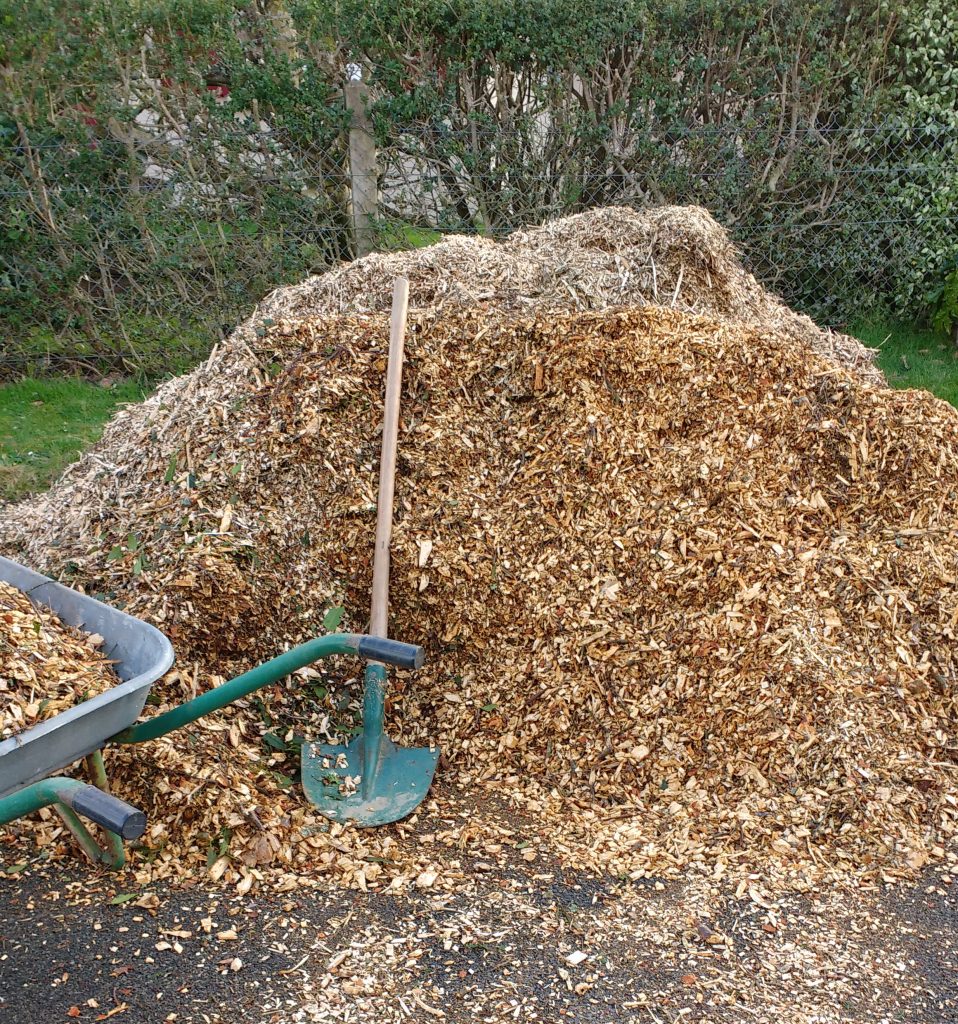
- You can also buy wood chips from sawmills or landscape suppliers. However, these are not always true RCW, as they may contain larger branches or trunk wood. They still make an excellent mulch, but they won’t offer exactly the same benefits as wood made primarily from young branches.
- In my opinion, the easiest solution is to contact a local arborist or tree service. They often need somewhere to dispose of freshly chipped branches and may be happy to deliver a load free of charge rather than paying disposal fees.
RCW quality varies
Even when the material comes from professional arborists, you rarely know the exact composition of the load. It is often a mixture of different tree species, and some branches may be larger than the recommended 7 cm (3 inches) in diameter.
Although larger branches contain fewer nutrients than young shoots, the resulting wood chips are still highly beneficial for improving the soil.
Wildlife
In rural areas, RCW may attract wildlife.
Wild boars, for example, are attracted by the fungi and small animals that develop beneath the mulch, so fencing may be necessary if they are common in your area.
Slugs can also become more numerous. Fortunately, they often feed on fungi and decaying organic matter rather than attacking vegetables directly.
Nitrogen Immobilization
This is probably the most frequently discussed drawback of RCW.
Nitrogen immobilization is generally most noticeable during the first year after applying fresh RCW. During this period, soil fungi begin breaking down the easily digestible sugars and proteins found in the young wood. To do this, they temporarily use nitrogen that is already present in the soil.
As a result, less nitrogen is immediately available for nearby plants. Some crops simply grow more slowly for a few weeks, while others may perform poorly if planted too soon after applying fresh RCW.
As decomposition continues, the fungi gradually begin breaking down cellulose and lignin. The nitrogen is slowly released back into the soil, and when the fungal network eventually dies, it returns all the nitrogen it has stored. In the long term, this process actually contributes to building a richer and more fertile soil.
When RCW is used as a surface mulch, nitrogen immobilization is generally much less significant than when the material is mixed into the soil.
Some gardeners compensate by applying a nitrogen-rich organic fertilizer, such as nettle tea or compost, during the first season.
From my own experience, the simplest approach is to spread RCW one year before planting a new vegetable bed. By the following season, earthworms and soil organisms have done most of the work. The soil becomes loose, rich, and easy to cultivate—without digging, tilling, or even using a broadfork.
4. How I Use Ramial Chipped Wood (RCW): My Experience
I’ve now been using RCW throughout my garden for several years. I’ve experimented with oak, cherry laurel, and more recently birch wood chips. So far, I haven’t noticed any major differences between the different tree species. Cherry laurel, despite the concerns some gardeners have, has performed just as well as oak in my garden.
In the Vegetable Garden
I still don’t have decades of experience with RCW in the vegetable garden, but I already have a few interesting observations.
Strawberries : RCW is often recommended as an excellent mulch for strawberries. Surprisingly, that hasn’t been my experience. Despite the mulch, I harvested very few strawberries.
Vegetable garden :
Year One with Cardboard + RCW
For my first trial, I covered the soil with cardboard and then added a layer of RCW. Corn and zucchini didn’t perform very well. On the other hand, pumpkins and sunflowers grew vigorously and produced excellent results.
Berry Bushes
Year One : I laid cardboard over the existing grass during winter, covered it with RCW, and planted my blackcurrants and currant bushes directly into holes cut through the cardboard without digging the soil first.
The blackcurrants and redcurrants established beautifully and produced vigorous new growth during their first season. Only one gooseberry struggled.
Year Two :The following January, I added another 2 cm (about ¾ inch) layer of RCW. The shrubs became even stronger and healthier. They produced plenty of fruit… until the birds discovered them and harvested almost everything before I could.
Raspberries
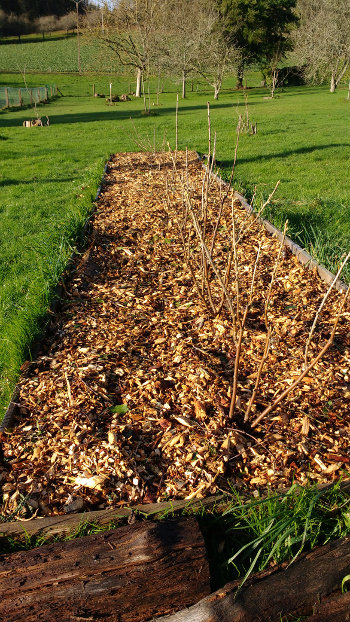
Raspberries seem to love RCW.
We enjoyed fresh raspberries almost continuously until October. This year is the third consecutive season that the raspberry patch has been mulched with RCW, and the canes have never looked healthier.
Unfortunately, the pigeons have now developed a taste for raspberries too!
Inside the Greenhouse
Things are slightly different inside my polytunnel.
Because the soil receives very little rainfall, RCW decomposes much more slowly than it does outdoors.
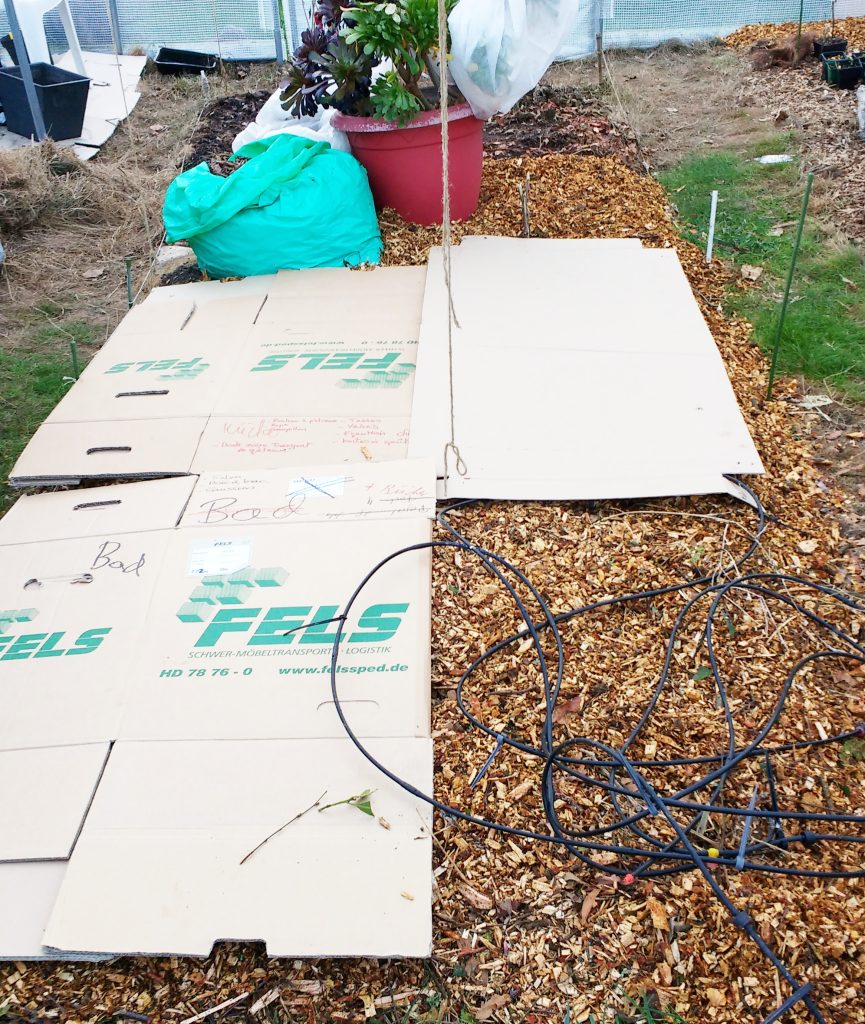
Method One: Cardboard + RCW
I covered either undisturbed soil or lightly cultivated soil with cardboard and then applied RCW.
Since the cardboard wasn’t watered enough before mulching, decomposition was extremely slow.
During the first spring, I planted tomatoes, eggplants, sweet peppers, and chili peppers.
The tomatoes were outstanding. They remained healthy all season, produced fruit until October, and required very little watering.
Method Two: Compost + RCW
For another bed, I spread compost over undisturbed soil before covering it with RCW.
The mulch decomposed much faster.
However, during the first year, the tomatoes didn’t grow as well as those planted using the cardboard method.
Year Two : In January, I added another layer of compost and sowed coriander.
The coriander grew exceptionally well, but I suspect it consumed a significant amount of nutrients because the zucchini performed very poorly afterward.
The tomatoes, however, look healthy again, and the harvest begins in early July.
One small trick I’ve adopted is placing sheets of cardboard on top of the RCW during particularly dry periods. This helps retain moisture because fungi need water to decompose the wood efficiently.
In the Ornamental Garden
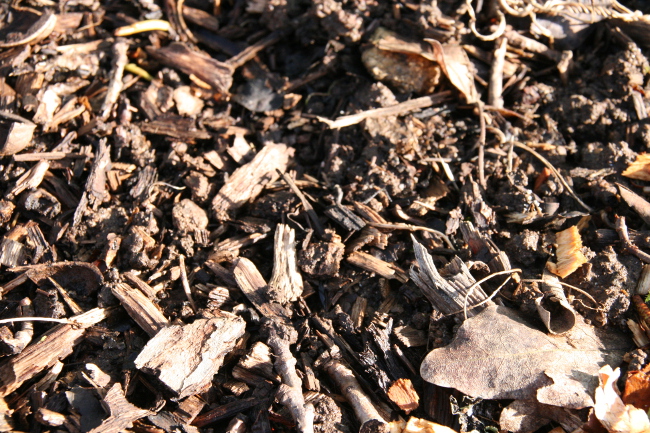
This is where RCW has impressed me the most.
Combined with cardboard, it has become one of the most effective ways I’ve found to control weeds, especially couch grass.
It also keeps brambles under control. They still need to be pulled by hand occasionally, but removing them has become incredibly easy.
Year One : I focused solely on eliminating weeds and didn’t plant anything.
Year Two : I added another layer of RCW and started planting. The plants established well, but bindweed quickly invaded the flower bed.
Year Three : By the third year, the previous mulch had almost completely decomposed, so I added another thin layer. The plants from the previous season flourished beautifully. Almost no weeds appeared, and maintaining the flower bed became surprisingly easy.Well… almost. Every summer I still have to pull a few bindweed vines!
Overall, RCW has transformed the way I maintain ornamental beds. The soil is never left bare, weeds are dramatically reduced, and the mulch continuously feeds the plants while improving the soil.
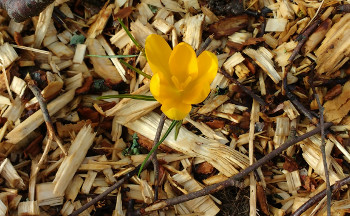
There is, however, one drawback. Annual flowers that rely on self-seeding may struggle to germinate through a thick mulch layer. For these beds, I prefer using fallen leaves or grass clippings instead of RCW. Bulbs and large clumps of primroses have never been affected by the mulch. As for my roses… they absolutely love it.
RCW in the Compost
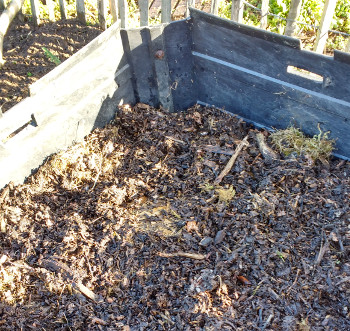
My latest experiment has been adding RCW directly to the compost.
In January, I mixed mature compost, partially decomposed compost, freshly chipped RCW, and some RCW from the previous year.
By May, the mixture had turned into a beautiful compost with the rich, earthy smell of forest humus.
Conclusion
After several years of experimenting with RCW, I can honestly say that it has changed the way I garden.
Whether in the vegetable garden, greenhouse, or ornamental beds, it has made gardening easier while steadily improving the quality of my soil.
RCW feeds the soil, suppresses weeds, conserves moisture, and greatly reduces the need for digging or tilling. Earthworms, fungi, and countless other soil organisms do most of the work for us.
When the soil remains permanently covered, it stays loose and alive. It doesn’t become compacted, which means there’s no need to turn it over or loosen it every year.
For me, that’s one of the greatest lessons nature has taught: healthy soil is living soil, and the less we disturb it, the better it becomes.

