
I want a flower-filled garden fast — without waiting months for it to come together.
I recently cleaned up the large flower bed in front of the patio. Some plants had died, and others simply no longer belonged there. Sometimes I plant something, give it two or three years to prove itself, and if it never really does anything convincing, I take it out.
At the same time, some perennials have really settled in nicely, and I also planted a Cordyline to add some height and block an eyesore. So the whole look of this bed has changed.
Now I’m looking for new flowering plants to reshape this space.
I keep going back and forth between purple… and pink.
And if there’s one color that instantly brings softness and charm to a garden, it’s pink.
The good news is that some pink perennials can establish fairly quickly and make a real impact in their very first season — especially when they’re planted in the right spot.
Sometimes romantic, sometimes cottage-style, sometimes soft and airy and sometimes much brighter, pink works beautifully in almost any garden style. It pairs just as well with white as it does with purple flowers, gray foliage, fresh greens, or even touches of blue.
And in spring, when I start wanting the garden to come back to life, this is exactly the kind of bloom I naturally gravitate toward.
April is also such a tempting time to plant. The soil is slowly warming up, spring rain helps new plants get established, and there’s still time for them to settle in before summer.
I want this bed to feel more flower-filled, more layered, more alive.
So here are the pink perennials I’m currently considering for this garden bed.
A quick note for U.S. gardeners
Of course, “planting in April” doesn’t mean exactly the same thing everywhere in the U.S.
If you garden in a colder zone, some of these may be better planted a little later in spring. And if you’re in a warmer region, April may already be prime planting time.
So think of this more as an early-to-mid spring pink perennial wishlist, especially for gardeners working with a sunny flower bed or border.
I’m also trying to choose plants that won’t just look pretty, but will actually survive, behave, and work in this particular space.
And if they also bring in bees and butterflies? Even better.
Why I like planting perennials in April
April is one of those months when I naturally want to garden more.
I start spending more time outside again, I notice the empty spots in my flower beds much more clearly, and after winter I always feel like adding more color.
It’s also a really practical time to plant. The soil is usually easier to work than it is in the heat of summer, there’s still moisture in the ground, and temperatures are often mild enough to help plants settle in well.
Planting perennials at this time of year not only helps prepare for the blooms to come, but also helps me start shaping the bed more intentionally.
This is often the season when I can picture most clearly what I want the garden to look like in a few weeks.
14 Pink Perennials I’m Considering Planting This April
1. Gaura
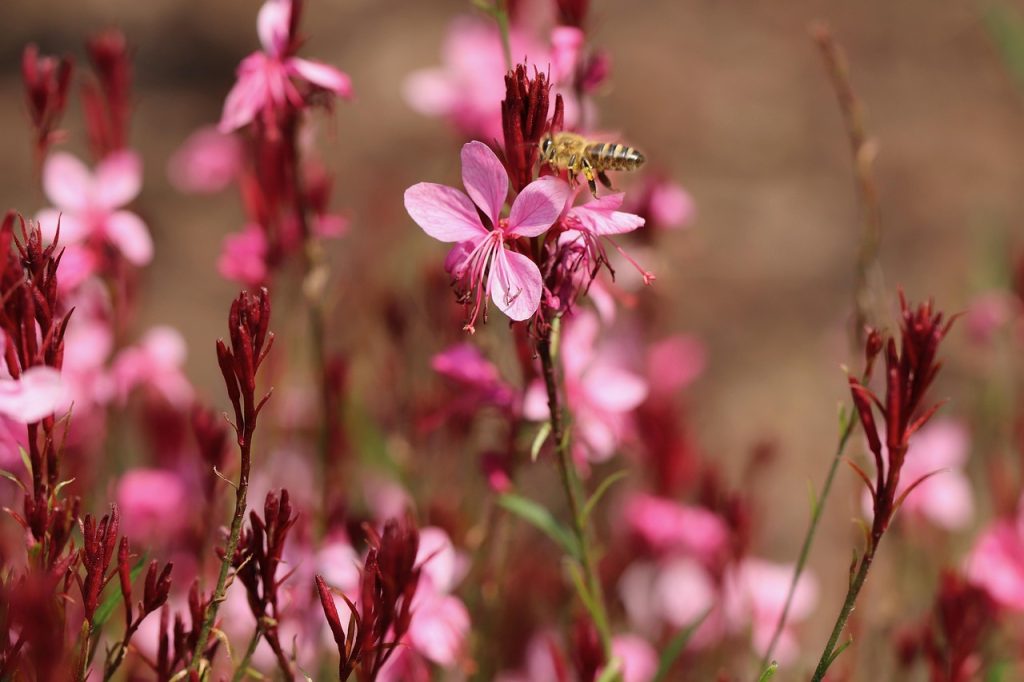
Gaura is one of those plants that instantly brings movement and lightness to a flower bed. Its tiny blooms seem to float above the foliage and dance in the breeze, which gives everything around it a softer, more natural look.
It’s perfect if you love gardens that feel loose, airy, and not too rigid.
In a border, it immediately softens the overall feel and pairs beautifully with denser or more structured plants.
But honestly, I probably won’t choose it for this spot. I’m afraid it may get too large, too floppy, and take over more space than I want.
2. Astilbe
Astilbe has something so soft and almost cloud-like about it. Its feathery plumes instantly bring freshness and a slightly lush, romantic feel.
I especially love it for those parts of the garden that need a little more texture and visual interest.
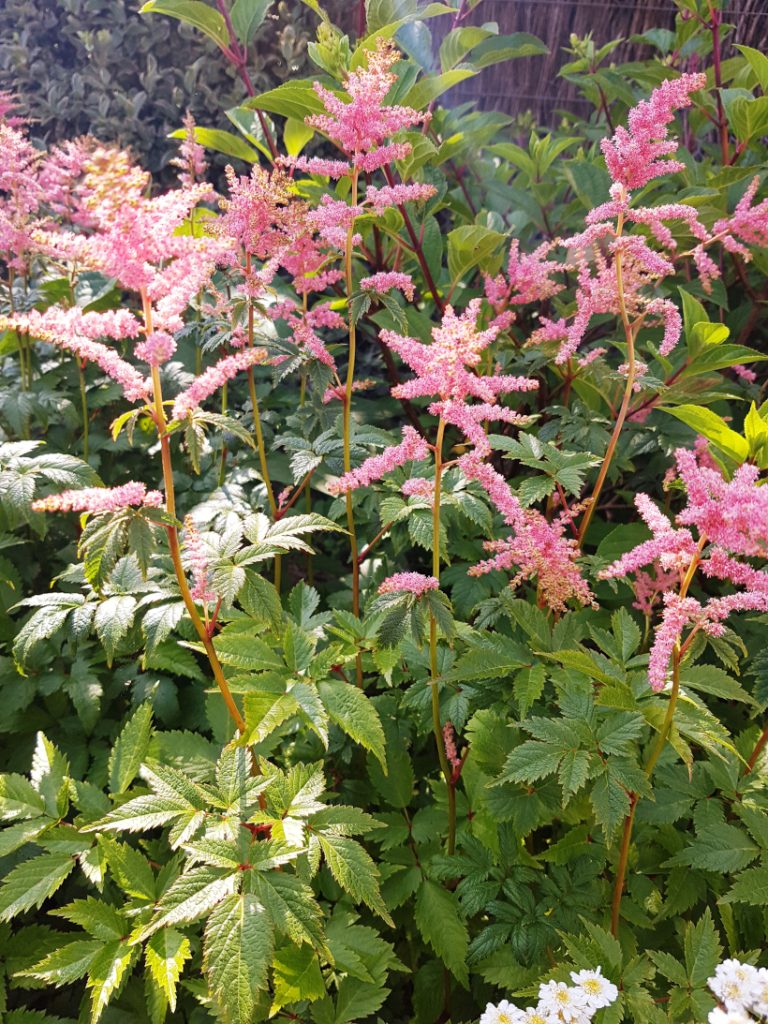
It’s also the kind of plant that can make a bed feel more layered without looking heavy.
That said, I probably won’t choose it for this bed either. Astilbe really prefers part shade to shade, and it also doesn’t like being crowded by larger plants overhead. It wants space, moisture, and cooler conditions.
In my sunny flower bed, it would probably struggle.
3. Japanese Anemone
Japanese anemone is such an elegant perennial, with a presence that feels refined without being showy.
It often gives a garden that late-summer romantic look, even before it blooms. It brings height, softness, and a kind of graceful movement that stands out right away in a border.
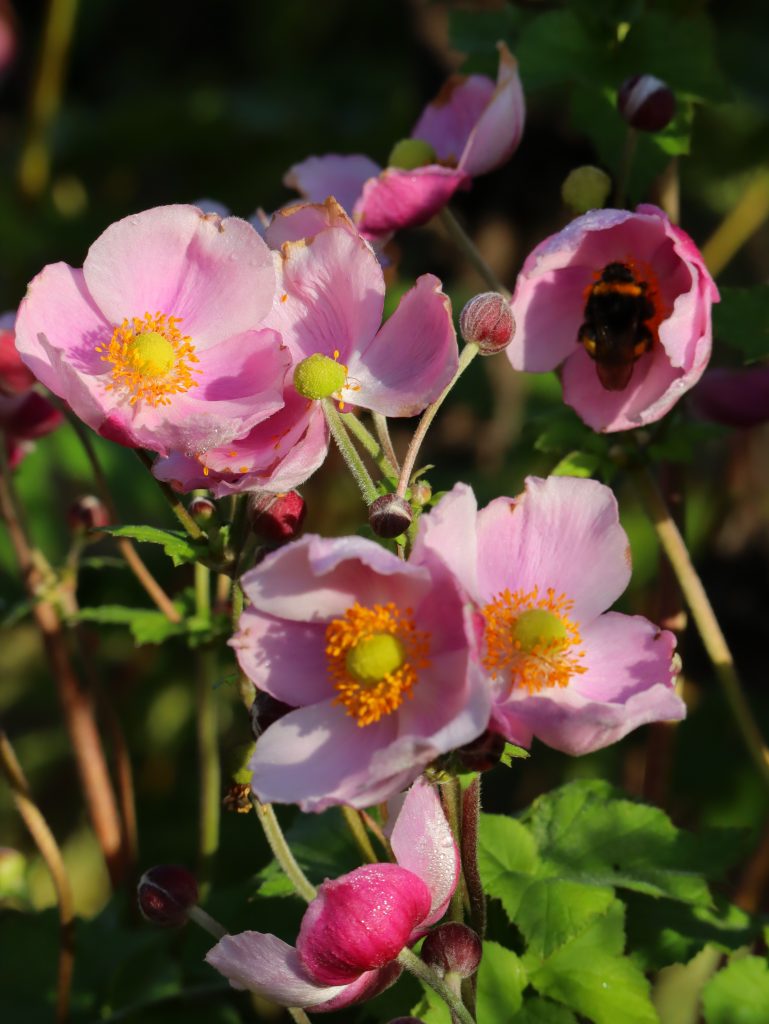
It’s the kind of plant that makes a big impression without ever looking too overpowering.
Still, it likes moisture and rich soil, and if it’s happy, it can spread more than expected. I’m still hesitating about planting it in full sun… although maybe it could work in the shade of the Cordyline.
4. Rose Campion (Lychnis coronaria)
Rose campion has a very simple, almost wild charm — and that’s exactly what makes it so appealing.
Its silvery-gray foliage really makes the bright pink flowers pop, and that contrast looks beautiful in so many garden styles.
It’s ideal when I want a more natural-looking flower bed without anything too polished or over-designed.
I already have a few plants, but they probably deserve more room and better placement.
This one is honestly a very strong contender.
5. Phlox
Phlox is such a cheerful, generous plant and always looks at home in a flower bed.
Depending on the variety, it can create pretty flowering drifts or add a fuller, more abundant look to a border. It’s one of those plants that can quickly make a garden feel more established.
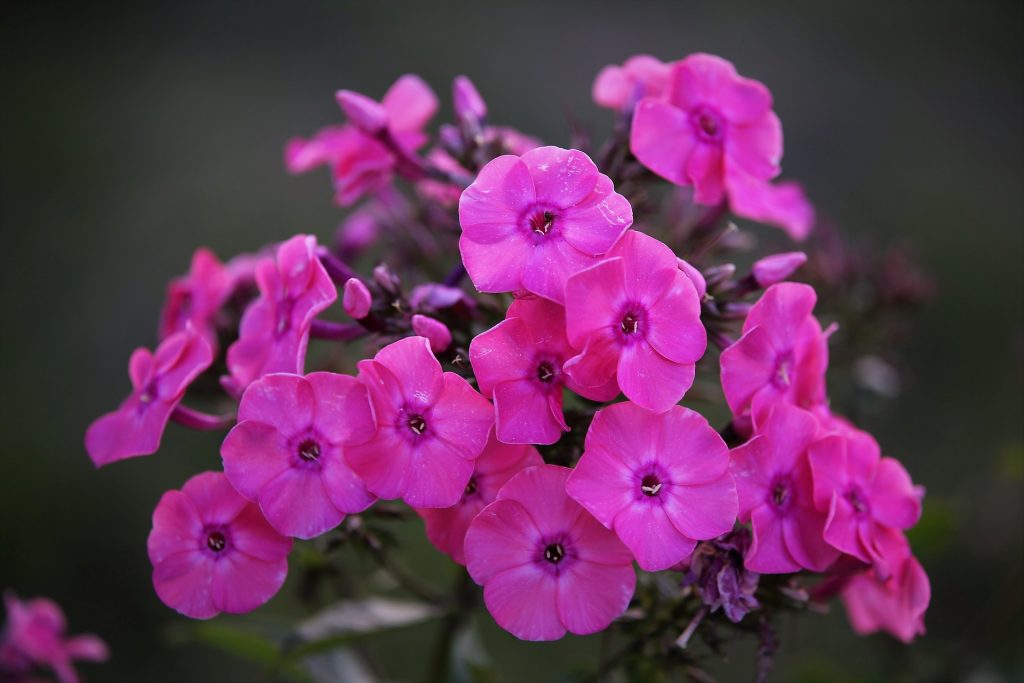
I don’t know it very well yet, but I’ve admired phlox in other people’s gardens for years.
I’ve never actually tried growing it myself though, so I’m still wondering:
will it really love full sun in this spot?
6. Yarrow
Yarrow may not look as romantic at first glance as some of the other pink perennials on this list, but it brings so much value to a flower bed.
Its flat flower heads add structure, which is really useful when I want to avoid a bed that feels too soft or too repetitive. It also instantly adds a more natural, meadow-inspired look.
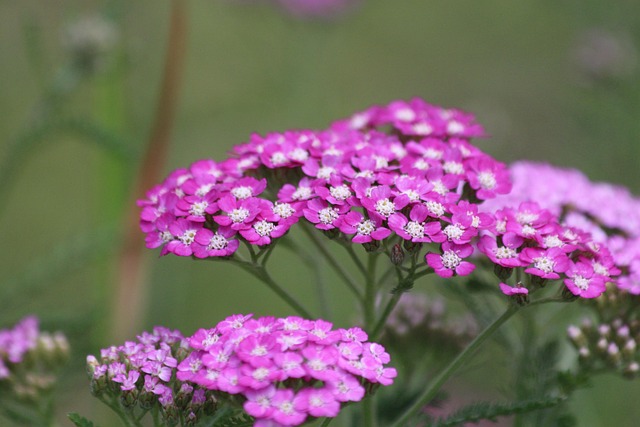
But personally, I find it difficult to work with. It doesn’t always stay upright, it spreads around a little too freely, and it becomes annoying to clean around once it starts mixing with weeds.
7. Bellflower
Bellflower is one of those soft, charming plants that seems easy to tuck in just about anywhere.
It has a timeless, cottage-garden feel, and its delicate blooms add a romantic touch without feeling too heavy.
It works especially well in cottage-style gardens, near stone, along borders, or in places where I want to keep things looking simple and natural.
Still, I find it a little slow to establish, and the result can feel a bit unpredictable. I could absolutely try it here… but I know the effect wouldn’t be immediate.
8. Valerian
Valerian has a real free-spirited feel to it.
It instantly gives a flower bed a more relaxed, spontaneous, almost Mediterranean look depending on the setting.
It has that “it grows wherever it wants, and somehow that works” kind of charm, which can be really beautiful if you like a less formal garden.
It’s also one of those plants that can quickly bring life to an area that still feels a little empty.
But it can also become invasive surprisingly fast, crowd out neighboring plants, and even work its way into cracks in walls or paving. So this one definitely comes with a warning label.
9. Daylily
Daylily is one of those plants I love because it makes life easier.
It has a generous presence, blooms well, and has a shape that feels both structured and graceful in a flower bed. It also looks beautiful as soon as it starts emerging in early spring, long before it flowers.
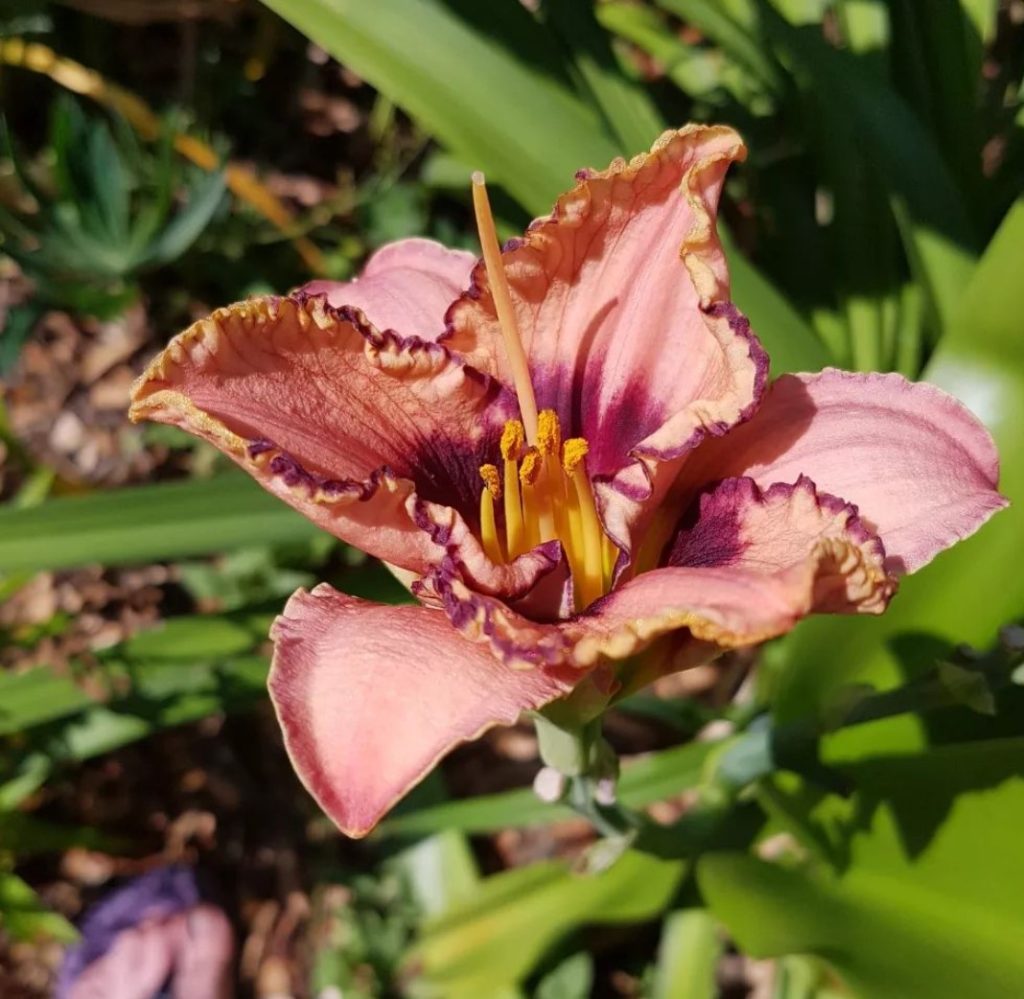
It’s exactly the kind of dependable plant I love when I want something beautiful without making gardening harder.
The only issue is… I already have a lot of daylilies in this patio bed.
10. Echinacea
Echinacea has such a lively, summery, cheerful feel. It instantly brings energy to a flower bed.
I love its natural, slightly wild look, and I especially love that it attracts pollinators so easily. It’s the kind of plant that makes the garden feel more alive.
It’s perfect if you like a flower bed that feels more natural and pollinator-friendly rather than too polished.
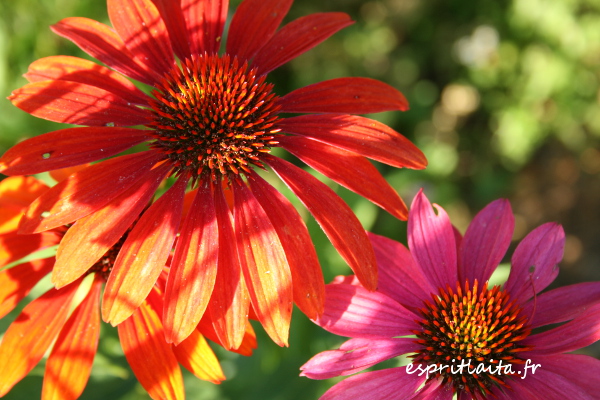
The problem is that it doesn’t last very long in this particular spot. Either the plants get eaten by voles, or they rot in winter because of damp soil.
That’s such a shame, because I really do love echinacea.
11. Bleeding Heart
Bleeding heart remains one of the most poetic perennials in the garden.
Its little heart-shaped flowers instantly give it something tender and nostalgic, and it works especially well in quiet, shady, tucked-away parts of the garden.
It’s one of those plants that always gets noticed because it has so much personality.
What bothers me is that slugs absolutely love it, and it doesn’t always come through winter well for me.
12. Pink Lupine
Pink lupine instantly brings height and personality to a flower bed with its tall flower spikes. It has that lovely English-garden look — generous, romantic, and just a little dramatic — that catches the eye right away.
The only downside is that it doesn’t bloom for very long.
Still, it’s a really interesting option if I want to bring vertical interest into the bed without losing that soft, floral pink feeling.
Its upright structure also contrasts beautifully with looser, softer plants, which helps create a more balanced and layered look.
13. Hardy Fuchsia
Hardy fuchsia is such a charming plant, easy to recognize by its delicate, often bicolor flowers in different shades of pink.
It instantly brings an elegant, slightly refined touch to the garden, with a light and almost dancing look.
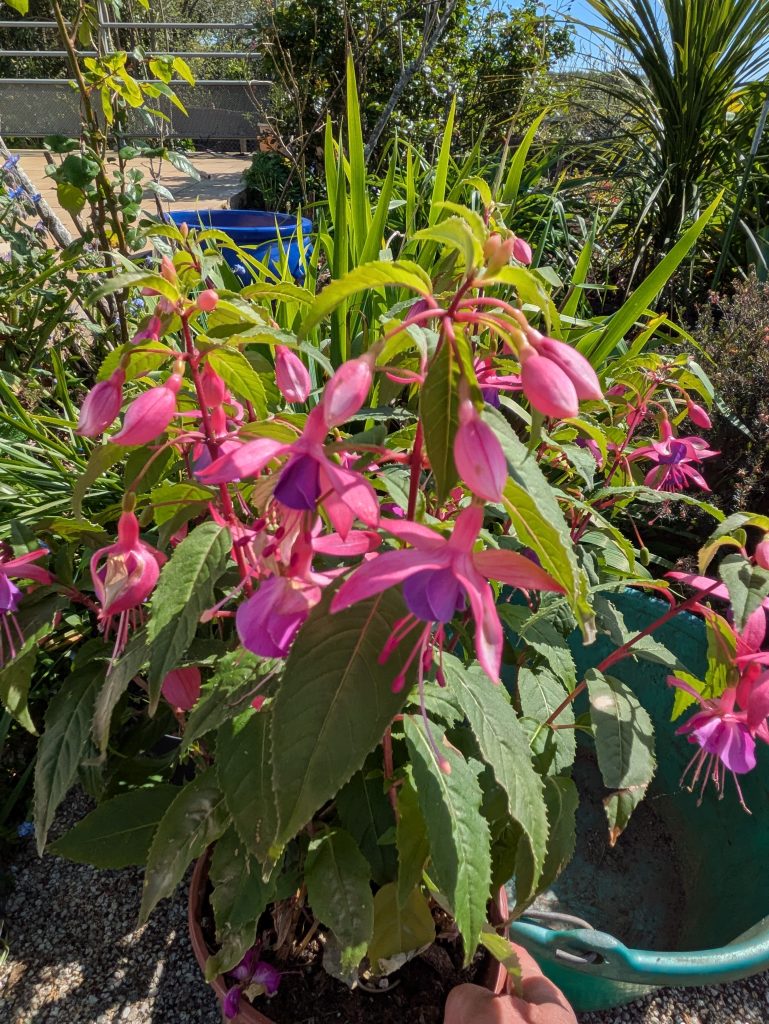
It’s a great option for part shade or light shade, where it can settle in without too much trouble. It also helps bring color to places where many other plants struggle.
With its softer shape and generous blooming habit, it fits beautifully into romantic or natural-style planting.
I’m going to try to find it a small shady spot somewhere.
14. Pink Delphinium
Pink delphinium instantly brings height and so much elegance to a flower bed. Its tall flower spikes immediately draw the eye and create a dramatic, classic cottage-garden look.
It’s exactly the kind of plant that helps structure a bed and highlight lower or softer plants around it.
The problem is keeping it alive from one year to the next. Slugs absolutely love it, and it often gets eaten as soon as the first shoots appear. On top of that, it doesn’t love too much rain or winter damp.
I thought I had found a solution by growing mine in pots and storing them in the tunnel greenhouse over winter, protected from rain. But in the end, they all died anyway.
I find it far too delicate and difficult. Which is such a shame, because it’s so beautiful.
How I’m trying to choose the right pink perennials
Even though all of these plants are beautiful, they definitely don’t create the same effect in a garden.
Some bring softness and movement, others add structure or height, some feel very romantic, and others lean more natural or meadow-like.
Before planting, I’m mostly trying to think about what I actually want this bed to become:
- a soft, flower-filled border
- a light and airy planting
- a slightly wild-looking space
- a more structured flower bed
- or something looser and more natural
Of course, sun exposure, soil, moisture, and available space all matter too. But honestly, the overall feeling I want is still one of the most important starting points.
How I’m trying to create a pink flower bed without making it feel “too pink”
Pink can be absolutely beautiful in a garden — but I think it works best when it’s layered.
Rather than relying on just one shade or one flower shape, I’m trying to mix:
- dusty pinks and brighter pinks
- airy flowers and denser blooms
- different heights
- different foliage textures
- plants that bloom at different times
That’s usually what keeps a flower bed from feeling flat and gives it a more natural, balanced look.
I also love pairing pink perennials with:
- white for more brightness
- purple for a romantic feel
- blue for freshness
- gray foliage for a chic contrast
- or simply lots of green for a softer, more natural look
The plants I’m most seriously considering right now
At this point, the ones I’m most seriously leaning toward are:
- Rose campion, because it already does well here and I love the gray-and-pink contrast
- Phlox, because I’ve wanted to try it for years
- Pink lupine, for height and that cottage-garden feel
- Hardy fuchsia, if I can find the right partly shaded spot
Some of the others are absolutely beautiful… but probably not ideal for this particular flower bed.
Conclusion
Planting pink perennials in spring is such a lovely way to bring more life, softness, and personality back into the garden.
And honestly, that’s exactly what I’m trying to do with this bed.
Some of these plants are still just ideas, some are strong contenders, and a few are probably better suited to other parts of the garden.
But that’s part of the process too.
Sometimes gardening is just as much about editing as it is about planting — trying things, watching what thrives, and slowly shaping a space that actually works and feels right.
FAQ
What are the best pink perennials to plant in spring?
Some beautiful pink perennials to plant in spring include gaura, phlox, echinacea, Japanese anemone, rose campion, daylily, bleeding heart, and pink lupine.
Are pink perennials good for pollinators?
Some of them absolutely are. Echinacea, gaura, yarrow, valerian, and certain types of phlox can all help attract bees and butterflies.
What pink perennials work best in full sun?
That depends on your climate and soil, but rose campion, phlox, yarrow, valerian, echinacea, and lupine are often among the better options for sunnier spots.

