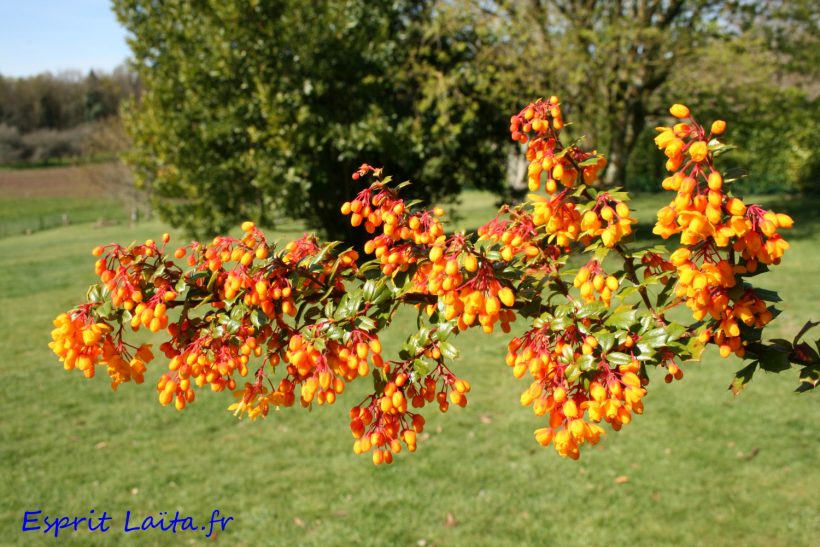
Barberry is a little-known plant that’s actually quite rare in our gardens. It’s also known as Berberis. They come in all shapes and sizes, with edible or inedible fruit, deciduous or evergreen, and sometimes in magnificent bloom. Some varieties produce edible fruit after cooking. Jam is made from them. It’s a shrub that’s also very popular with birds.
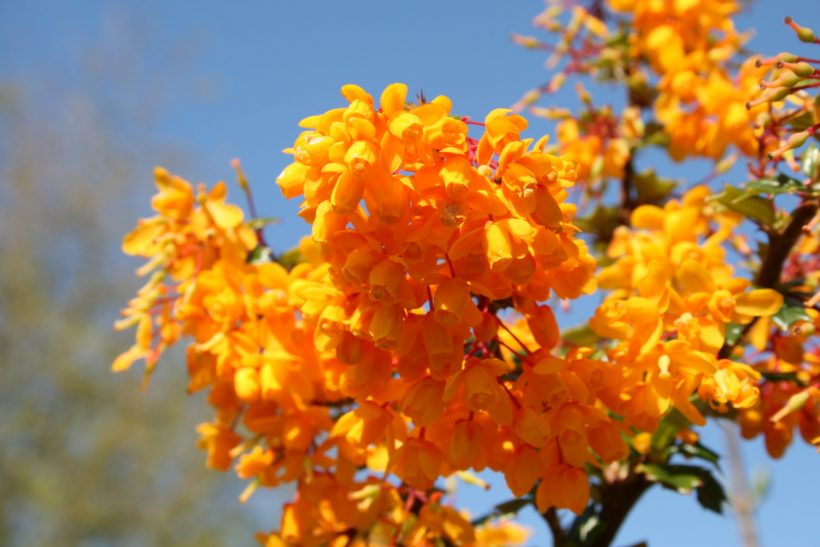
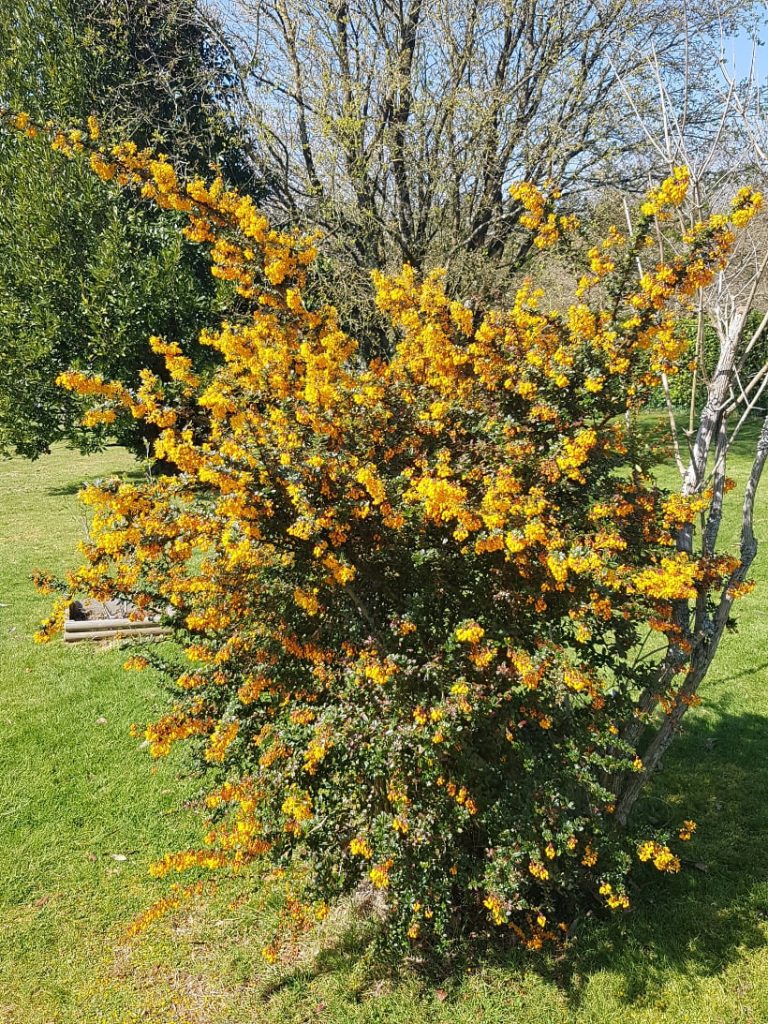
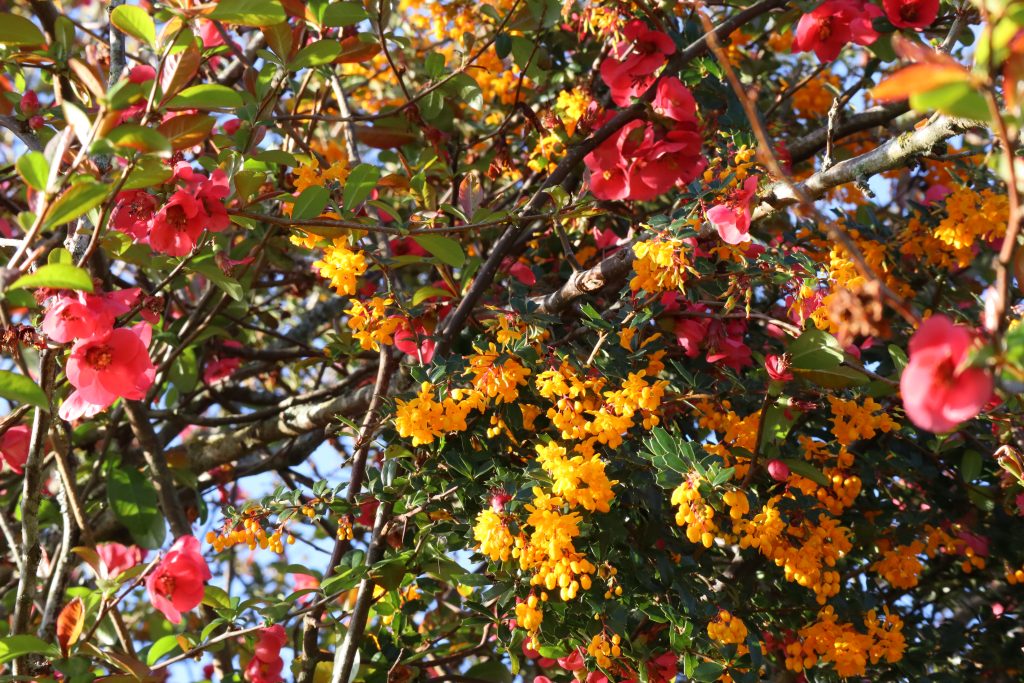
I have several plants in my garden. One has grown in the middle of a clump of Japanese quince. They flower almost at the same time and the mixture of red and orange is magnificent. When the weather’s fine, this big bush attracts lots of bees and bumblebees.
According to Wikipedia, “In France, from the 19th century onwards, barberry was frequently eradicated because it is an intermediate host in the cycle of wheat stem rust, a fungal pathogen of cereals”.
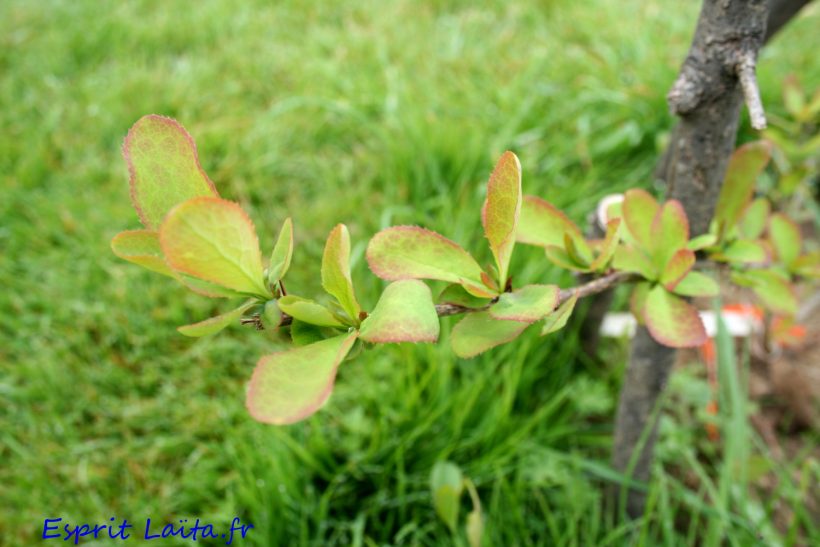
There are an estimated 175 species of Berberis. The disadvantage of this plant (or the advantage if you want a defensive hedge to protect you from intruders) is that it is prickly. The leaves sting, and sometimes the branches too. What’s more, these leaves decompose slowly. So it’s best not to throw them in the compost. The variety I like so much has prickly leaves.
Wine thorn is edible
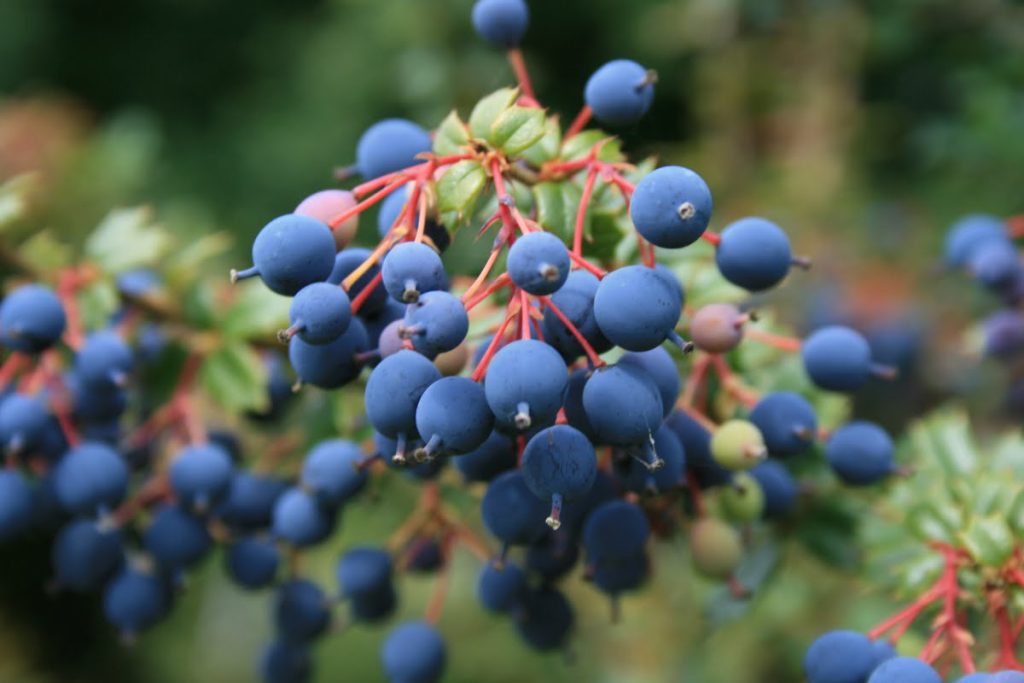
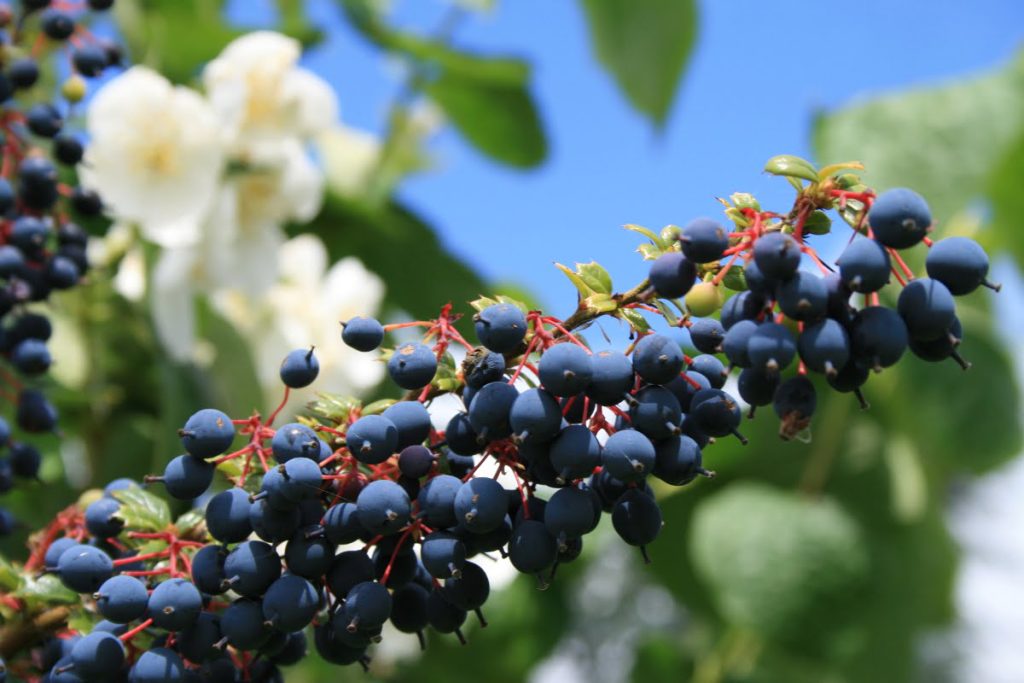
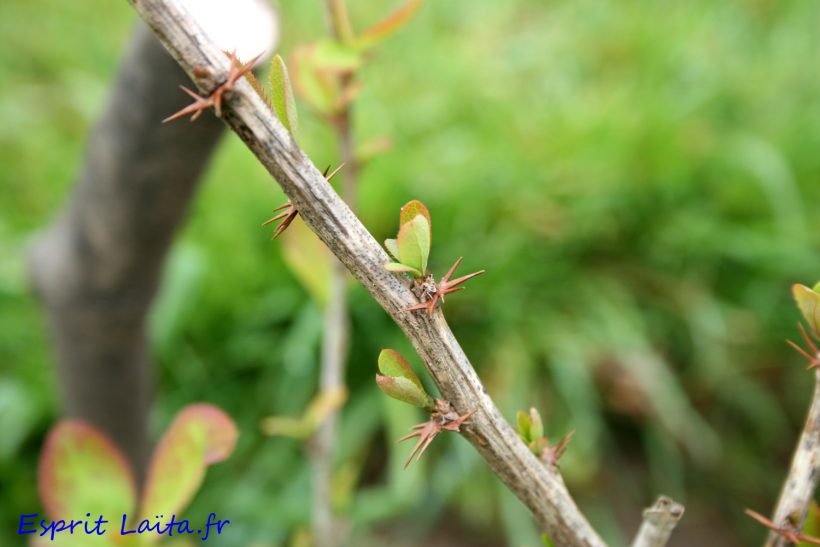
We bought another one, Berberis Red Tears, whose leaves don’t sting, but whose branches are covered with large needles. Why buy such a shrub if you can’t even rub against it? Well, because you can eat the berries! And yes, you can make jam out of them. I hear it’s packed with vitamin C. The berries should be eaten very ripe, or cooked thoroughly, otherwise they’re toxic. The rest of the plant is toxic. Red Tears loses its leaves in winter. In autumn, they turn a lovely shade of red.
In terms of flavour, barberry would go very well with chocolate (oh! neat!) and saffron. Like all fruits and everything else discussed on the Web, barberry is of course wonderful for your health.
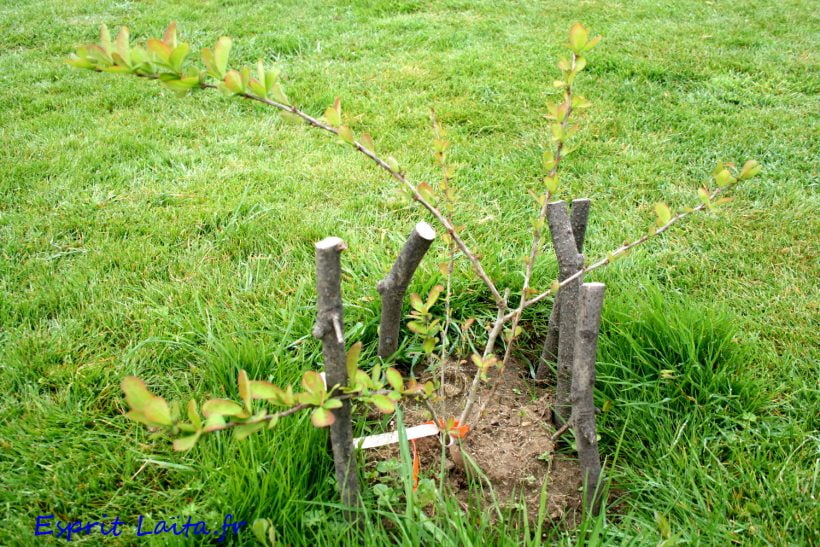
But I’m hoping for a good bloom. This year, there isn’t even a small flower in our new plant.
Planting and propagating Berberis
Planting is a simple autumn operation. It’s not a complicated plant. We sometimes recommend draining, stony soil, but here it thrives in acidic, rich, moderately draining soil. My Berberis grow in full sun and I never water them.
Propagation can be done by cuttings, but the easiest way is to recover a small plant from the mother plant.
I did find a recipe for barberry jelly on marmiton:
Preparation time: 10 minutes
Cooking time: 120 minutes
Ingredients (serves 6):
– bunches of barberry
– 1 apple (optional)
– granulated sugar
– water
Recipe preparation :
Place whole bunches in a jam pan.
Add water (slightly below fruit level).
Heat until fruit bursts (check that it crushes with a wooden spatula).
Pass the burst clusters through a food mill (fine mesh).
The result is a slightly thick purée.
Strain this purée, and the juice remaining in the bowl, through a sieve (or muslin) to remove any small seeds, then measure the juice obtained.
Pour the juice into the bowl with the same weight of sugar + 20% (due to the acidity of the fruit).
Add the quartered apple.
Cook for around 1 h 30, skimming frequently.
Remove the apple quarters and place in jars.
What do you think of this plant? Do you have any in your garden? Do you eat the berries?
AND if you recognize the variety, please leave me a note.